
← All sectors

01   ACROSS ORGANISATIONS: PROJECTS & PARTNERSHIPS / ENERGY

The outage window is fixed.
The reservations are still unspoken.

The contractor has committed to a sequence. Operations needs confidence about access. A specialist crew cannot start until preceding work is released.

Nobody wants to be the person who challenges a plan everyone else has already committed to.

That’s exactly when the next conversation matters.

Let’s talk about your project →

02   ENERGY / Delivery context

The plan is shared. The reservations may not be.

At the coordination meeting, commitments sound firm. Afterwards, one supervisor asks what happens if the workfront isn’t released. Elsewhere, a key design decision remains unresolved. If those reservations stay in separate conversations, the shared plan loses its connection to the work.

Hidden Currents helps the people involved bring those different accounts into one conversation: what each group sees, what it assumes, what it needs—and what its own behaviour makes easier or harder for others.

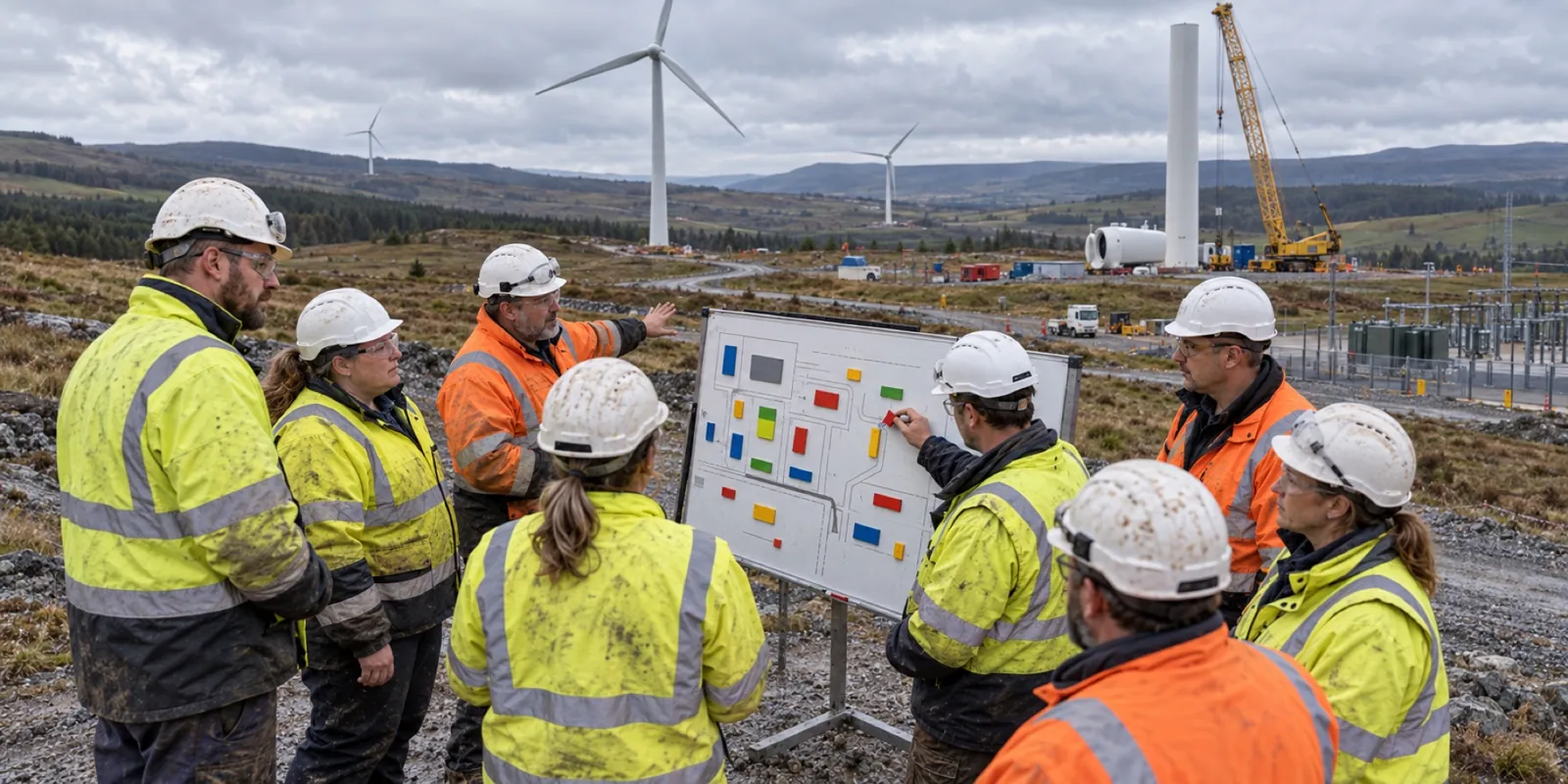
Project representatives coordinating access and work sequencing at an onshore wind farm under construction
Access and sequence coordination during a wind-energy project.

SCENARIO 1 OF 3

The crane is booked. Access is still uncertain.

The turbine supplier has booked its crew and crane for a narrow installation window. Delayed civil works threaten access to the crane pad. The site team assumes the supplier can rearrange; the supplier expects the agreed slot to be protected.

By the time the delay is acknowledged, options have narrowed and both sides are arguing over the cost.

The site team softens its warnings, hoping to recover lost time. The supplier hears reassurance rather than uncertainty. Neither wants to reopen a costly commitment, and each assumes the other understands the risk.

SCENARIO 2 OF 3

Neither side wants to concede. The exchanges keep score.

A wind-farm developer considers an installation change within scope. Its grid-connection partner sees additional design, specialist work and testing that could delay the connection.

The developer faces a commercial deadline; its partner has scarce resources committed elsewhere. Each feels its pressures are being overlooked.

Meetings produce apparent agreement. Afterwards, emails copy in senior people, reopen who should pay and question what was agreed.

Each side rehearses its grievances internally while documenting the other’s failings. Finding a workable adjustment begins to feel like accepting blame. Defending their position takes precedence over finding a solution together.

SCENARIO 3 OF 3

A site visit is approaching. Nobody wants the spotlight.

An unresolved land-access agreement delays a wind farm’s grid-connection cable route. The owner, engineering partner and contractor disagree over scope, cost and responsibility.

The connection date is slipping and costs are mounting. Ahead of a site visit, senior management demands a recovery plan and asks why the problem wasn’t escalated sooner.

Fear of blame shapes what each group is willing to say. Updates emphasise delays caused elsewhere, while uncertainties are softened or omitted. Each prepares its own defence rather than confront what the groups now need from one another.

03   ENERGY / HOW WE HELP

Make the dependencies visible.
Change how the groups work through them.

We help the teams and organisations involved examine what happens when priorities compete: how concerns are raised, which assumptions are tested, where decisions stall and how shared responsibilities are understood across the project. The aim is clearer communication, better teamwork and coordination, and stronger follow-through across the groups that need to deliver together.

At Intergroup Consulting, we begin with the results you need and the critical relationships required to deliver them.

Through diagnosis and structured working sessions, we help all project groups surface recurring patterns, agree observable changes, deliver on commitments and review progress as delivery continues.

Explore How We Work →

Three teams. One overall result.

The final team needed enough time to finish well. Success depended on all three teams taking responsibility not just for their own part, but for the overall project result.

Hear Sean describe how the work helped create a genuine “We’re in this Together” spirit — strengthening trust, shared ownership and the conditions for successful project delivery.

Sean HegartySenior Project Leader, Energy Sector

04   ENERGY

Which relationships will your next critical deadline test?

Tell us where unspoken reservations, strained relationships or defensive exchanges are putting delivery at risk—or could threaten the next commitment. You don’t need a finished diagnosis.

We’ll explore with you how to strengthen relationships among your project groups, work through what’s getting in the way and help them deliver together.