
← All sectors

01   PROJECTS & PARTNERSHIPS / PROPERTY DEVELOPMENT & CONSTRUCTION

Completion may be the goal.
But are all parties working towards the same outcome?

The developer is balancing the project vision, commercial viability and the experience future customers will have. The Design Team is bringing its own design vision, professional reputation and commercial interests to the competing requirements. Contractors need decisions and workable sequences. Operators and occupiers need a development that works when the doors open.

A shared completion date does not, on its own, join those priorities together.

Let’s talk about your development ↗

02   PROPERTY DEVELOPMENT & CONSTRUCTION / DELIVERY CONTEXT

The decision is in the minutes.
Its consequences are still in separate conversations.

A design change has been agreed. The developer sees a better experience for future occupiers. The contractor sees an instruction whose scope is still unclear. A specialist subcontractor sees work that may have to be undone. The operator is wondering whether anyone has checked how the space will actually function.

Each group has a reasonable account of the decision. What’s missing is a shared understanding of what it now requires from them—and a way of raising important concerns before positions harden.

Hidden Currents brings those accounts into the same conversation, helping people understand how their assumptions, thinking, decisions and behaviour affect the work and progress of others. And what now needs to change.

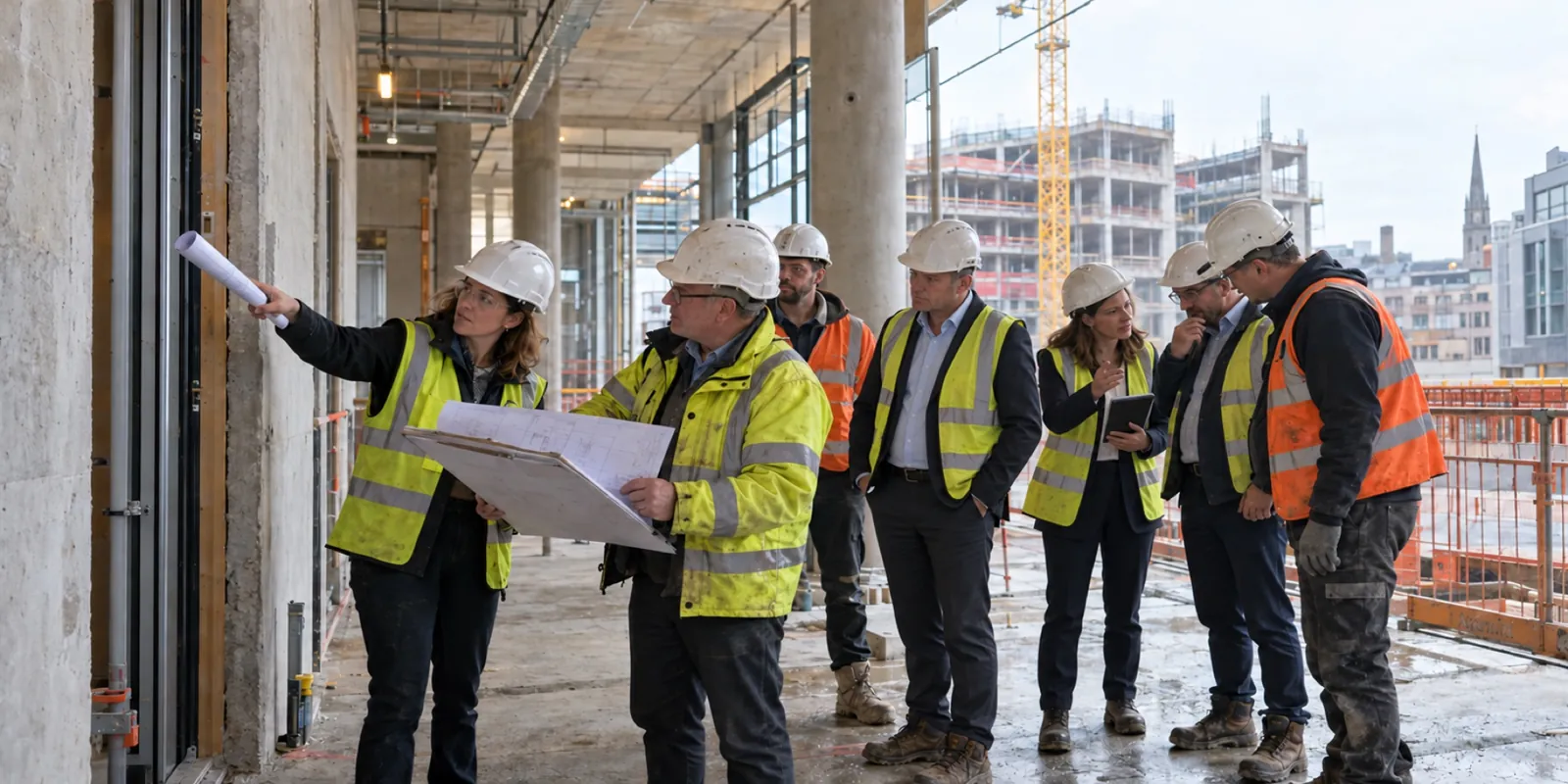
Project representatives working through a design and occupation-readiness decision during a walk-through of an unfinished property development

PROPERTY DEVELOPMENT & CONSTRUCTION / SCENARIOS

Scenario 1   PROPERTY DEVELOPMENT & CONSTRUCTION

The vision survives the presentation. Does it survive the decisions?

Everyone endorsed the ambition at the outset. As cost plans, design coordination and procurement decisions develop, each group makes sensible choices within its own responsibilities. Over time, however, each group can unconsciously come to perceive, prioritise and protect a slightly different version of the project. Questions about value, scope and user experience become negotiations over whose priority should give way—straining trust and slowing decisions the project needs. The difficult challenge is behavioural as much as technical: groups begin protecting their own interpretation rather than working through the differences together.

Scenario 2   PROPERTY DEVELOPMENT & CONSTRUCTION

The next package is ready. The workfront isn’t.

A specialist contractor has committed people and materials. Access depends on preceding work, a coordinated detail and an answer to an outstanding request for information. The project manager is absorbed in another deadline challenge, while the developer is weighing a change with cost implications. Each assumes the other has the next decision in hand. The main contractor needs a firm commitment; the specialist needs conditions in which that commitment is achievable. Repeated promises and qualifications obscure what needs to be resolved together; confidence in commitments erodes and the workfront remains blocked. The technical blockage becomes an inter-group challenge of avoidance, delayed escalation and weakening trust. The delay continues. Frustration rises.

Scenario 3   PROPERTY DEVELOPMENT & CONSTRUCTION

Practical completion is approaching. Opening is another conversation.

The construction team is closing out defects and preparing handover. The hotel operator, retail tenant or facilities team is planning fit-out, training and day-to-day operation. Then comes a change request for “just a few further tiny changes”—adjustments that will actually require significant rewiring or re-engineering of plumbing services. On site, the request lands as a major disruption at the point of completion. The delivery team feels the goalposts are moving; the operator sees the request as consistent with the developer’s promise of “excellent customer service” at the outset—and with what the building needs to function. Assumptions about readiness and use have never been worked through together; the technical change exposes a difficult inter-group challenge about responsibility, readiness and what good service requires. Frustration and blame now strain cooperation and put timely handover at risk. Tempers are near boiling point. One more request could easily trigger an angry confrontation.

03   PROPERTY DEVELOPMENT & CONSTRUCTION / WHERE CHANGE CAN BEGIN

When tempers rise,
give frustration a constructive outlet.

When patience is exhausted, project groups need support and a constructive outlet for what has built up. People need to feel heard and have the pressure they are under recognised.

We provide structured, supportive platforms in which groups can ventilate frustrations, hear one another’s experiences and work through what needs to change. This helps people regain perspective, rebuild mutual respect and agree how to move the work forward together towards timely completion.

Explore How We Work ↗

04   PROPERTY DEVELOPMENT & CONSTRUCTION / CLOSING INVITATION

Where are different priorities beginning to pull your development apart?

Start with the decision that keeps returning, the commitment that never quite holds, or the corridor conversations people are having separately. We’ll explore with you what’s happening between the groups involved and how we could help them move forward together.

Let’s talk ↗

Prefer to call? +353 87 2445100